
ReproScripts BarCodes Barcodes plugin for CorelDraw
- 50+ types of fully vector 1D, 2D and Post barcodes
- QR code design editor and ready-made styles
- loading data from a barcode for editing
- recognizing barcodes in bitmap images and converting them to editable vectors
- VCard, meCard, WiFi and other QR code types for smartphones
The plugin is designed to create various types of barcodes in CorelDraw. Unlike standard tools, all codes are formed in a vector form, preserving data encoded in them, thus providing the possibility of editing in the future .
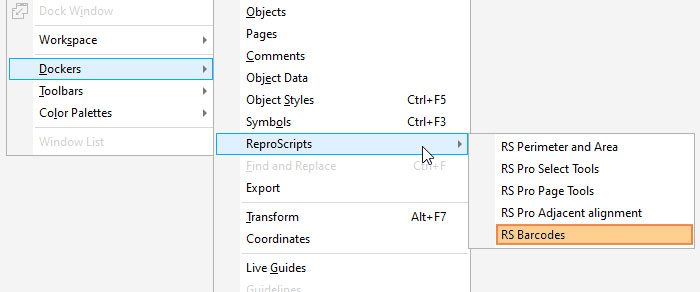
After installing the plugin, a new Barcodes item appears in the Windows > Dockers > ReproScripts menu allowing you to open the docker.
Barcode type selection and configuration
At the top of the panel there is a drop-down list of supported barcode types. Depending on what kind of code you want to generate, you can set the appropriate value and additional parameters.
Barcode setup
Data and barcode rendering parameters are managed in three tabs, which are switched using buttons with icons.

 Barcode value tab
The value tab defines the data to be encoded. The editor adapts to the selected barcode type and variant: most linear, matrix, and postal barcodes use a text field, EAN and UPC types provide variant-specific input, and QR Code offers structured editors for plain text, URLs, contact cards, e-mail, SMS, Wi-Fi, events, locations, and cryptocurrency payments.
A prompt above the editor describes the supported characters and data limits for the current type or variant. The preview is refreshed as the value changes, so you can immediately see whether the selected barcode can be generated. The entered data is validated by the barcode encoder together with checks for structured fields. Invalid input is highlighted, and no valid preview is shown until the value is corrected.
 Barcodes design tab
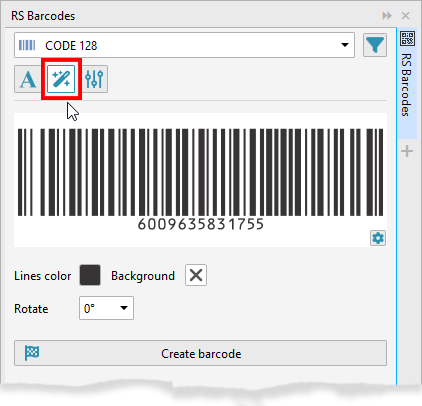
The design tab controls the appearance shared by all barcode types. Here you can set the foreground color used for bars, modules, and readable text, choose the background color, and rotate the finished barcode by 0, 90, 180, or 270 degrees.
For QR Code, this tab also contains designer-specific controls. You can choose and customize a design style, change the appearance of modules and finder patterns, and configure an optional central logo placeholder. These settings change the visual presentation without changing the encoded value.
 Barcodes parameters tab
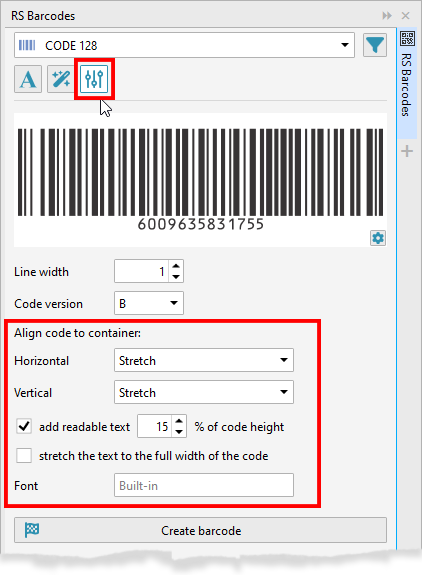
The parameters tab contains settings specific to the selected barcode type. Depending on the symbology, these can include check digits, error-correction level, symbol dimensions, rows and columns, bearer bars, line-width ratios, add-ons, and other encoding options. Only parameters supported by the current type are shown.
It also provides common readable-text settings for supported 1D barcodes: you can show or hide the text, select its font and size, and set its alignment.
Container settings control how the generated barcode is sized and positioned relative to a sample shape. The container is the shape selected in CorelDRAW when the barcode is created. You can fit the barcode to the container horizontally and/or vertically, or preserve its calculated size and choose its horizontal and vertical alignment inside the shape. If no sample shape is selected, there is no container and the barcode is simply placed in the center of the page.
Setting up a QR code
The QR code parameters are significantly different from other types and contain more options.
 QR code value
In the value panel for a QR code, you can select the type of data that will be encoded in it. In addition to just text, you can encode other types of data. The plugin collects and performs basic data validation for each value type and encodes it into a QR code.
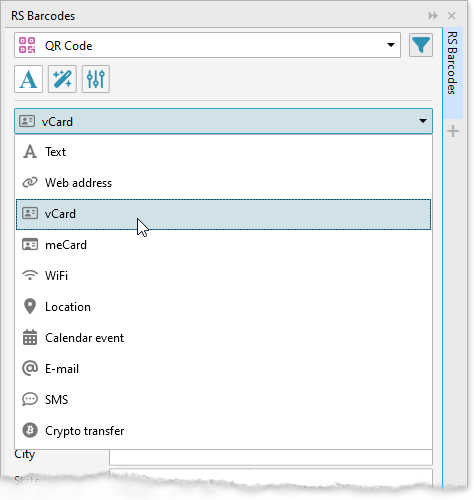
| QR Value type | Description |
|---|---|
| Text | Any text value that can contain up to 4296 alphanumeric characters, 7089 numeric characters, or 2953 bytes. |
| Web address | The address of a website or other Internet resource. The plugin checks the basic structure of the address and does not accept obviously incorrect values. |
| vCard | This is a file format standard for electronic business cards. In this format, you can encode both business and personal data, which can then be read on a smartphone and entered into the address book. |
| meCard | Another format for exchanging contact information for smartphones. Contains only the minimum required fields, allowing you to create more compact and better readable codes. |
| WiFi | The QR code will contain the data necessary to connect to the WiFi network without the need to enter data manually. Supported by all modern smartphones. |
| Location | Encoded geolocation, suitable for reading and further building a route in navigation applications. |
| Calendar event | Data for generating an event suitable for use with various calendar applications. A universal code is generated that is recognized by Google, Apple and other calendars. |
| Generates code to quickly prepare a message for sending by email. | |
| SMS | Generates a code for quickly preparing a message as an SMS. |
| Crypto Transfer | A QR code indicating the crypto wallet details for receiving transfers. May or may not contain the amount being transferred. |
QR code design
 WATCH VIDEO: Designer QR codes in CorelDraw
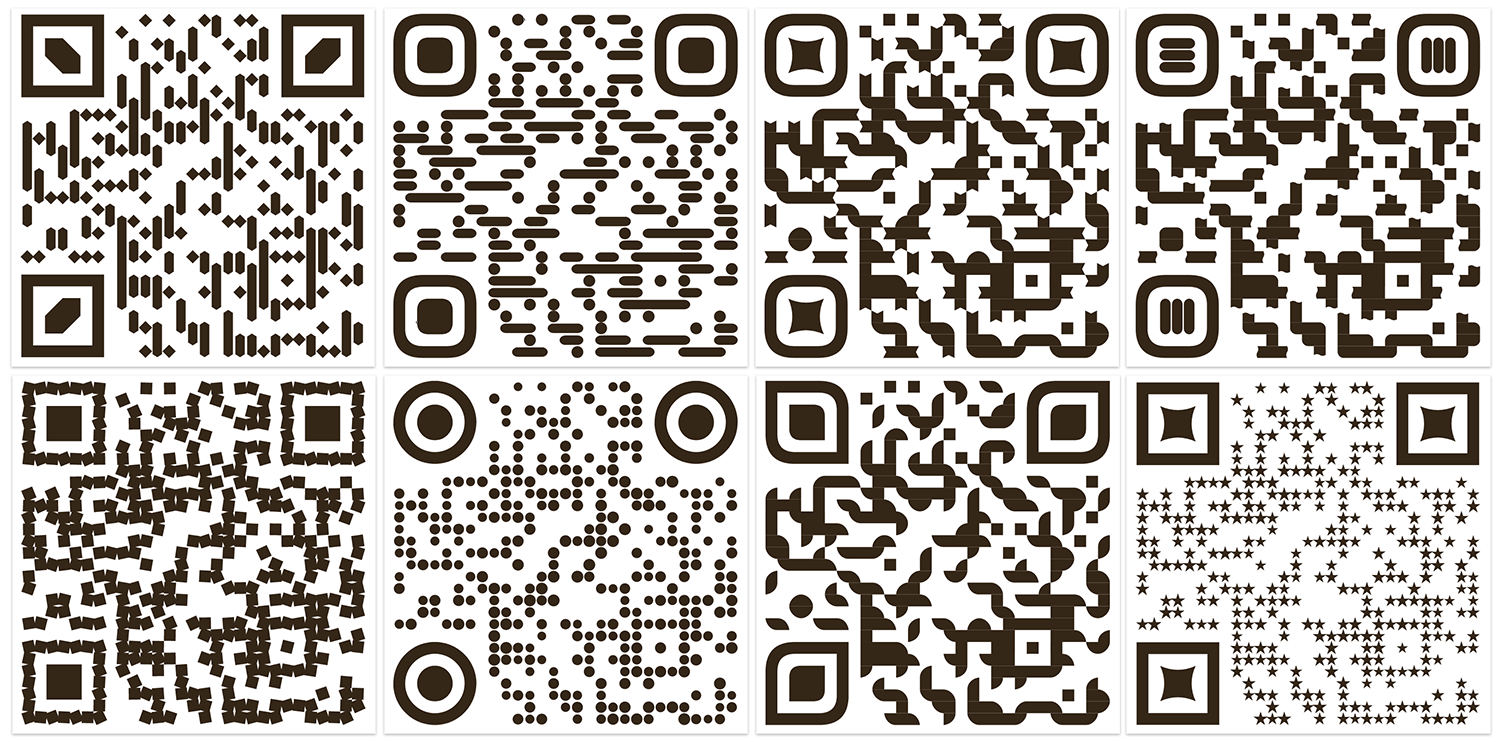
Design styles
In the barcode design panel, you can specify the QR code style. It includes various parameters that allow you to radically change the appearance of the finished code. The panel contains a preview window in which you can immediately see how the code will look when designed in one style or another.
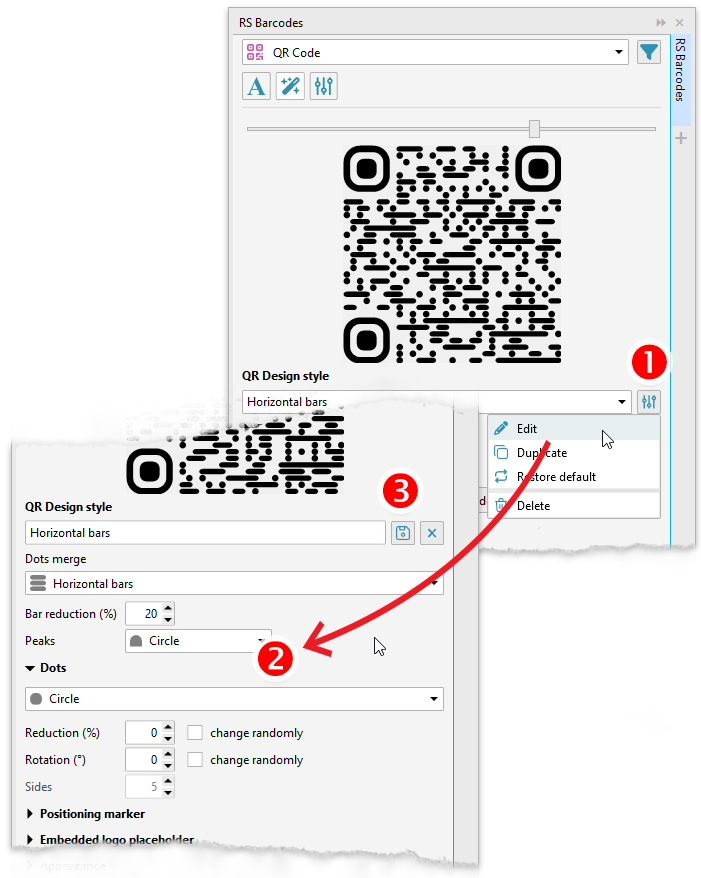
The plugin comes with several standard styles that you can use right away. Based on these styles, you can create your own. To do this, in the side menu of the style list, you can duplicate it or open it for editing. 1 In the editor that opens, you can select and configure various parameters 2 that affect the appearance of the QR code — the method of grouping points, their shape and variations, the shape and design of peaks, corner and register elements. This opens up rich possibilities for managing the design of the QR code and compiling your own library of QR code styles. Both standard and custom styles can also be used when generating variable data in the ReproScripts VDP plugin. You can save the finished style by giving it a suitable name or immediately generate the code from the style editor. 3
Placeholder for a logo
The plugin also allows you to calculate and create a place in the center that can be used to place a logo. By activating this option, you can set the shape and aspect ratio that is required for your logo. The plugin will set the maximum level of error correction for the QR code and calculate the area that can be safely allocated for the logo without affecting the readability of the QR code. You can place your logo or other suitable image in the space allocated by the plugin.

How to create and edit a barcode
WATCH VIDEO: Vector editable barcodes in CorelDraw
After setting the desired values, the button is activated, clicking on which you can form a barcode. The plugin will create a new document if there is no active one at the moment. The new barcode is by default placed into the center of the page. But if there is a CorelDraw shape selected, the plugin will take its size, position and rotation angle and apply these values to the newly created code. This allows to easily manage the size and position of codes in the design.

Editing barcodes
Each barcode, prepared by the plugin can be edited later. If it is selected in the document, additional buttons and appear in the docker.
The button allows to read and load from the barcode in the docker. After making changes, you can click the button and a new the barcode will be replaced with new one. This way you can easily edit barcodes without having to re-enter the data encoded in them every time.
Recognizing a barcode in an image
WATCH VIDEO: Turn barcode images into editable vectors in CorelDRAW
The plugin can recognize a barcode contained in a bitmap image imported into CorelDRAW. Select a single image to display the and buttons in the docker. For better results, the barcode should be reasonably large, in focus, and have sufficient contrast and an unobstructed quiet area around it.
The following barcode types can be recognized: QR Code, Data Matrix, PDF417, Aztec Code, Code 128, Code 93, Code 39, Codabar, Interleaved 2 of 5 and ITF-14, EAN-13, EAN-8, UPC-A, UPC-E, GS1 DataBar Omnidirectional, and GS1 DataBar Expanded.
Click to scan the selected image. When a barcode is found, its type and encoded value are loaded into the appropriate fields in the docker and a new preview is generated. You can verify or edit the recognized value and adjust the barcode design and parameters before creating it.
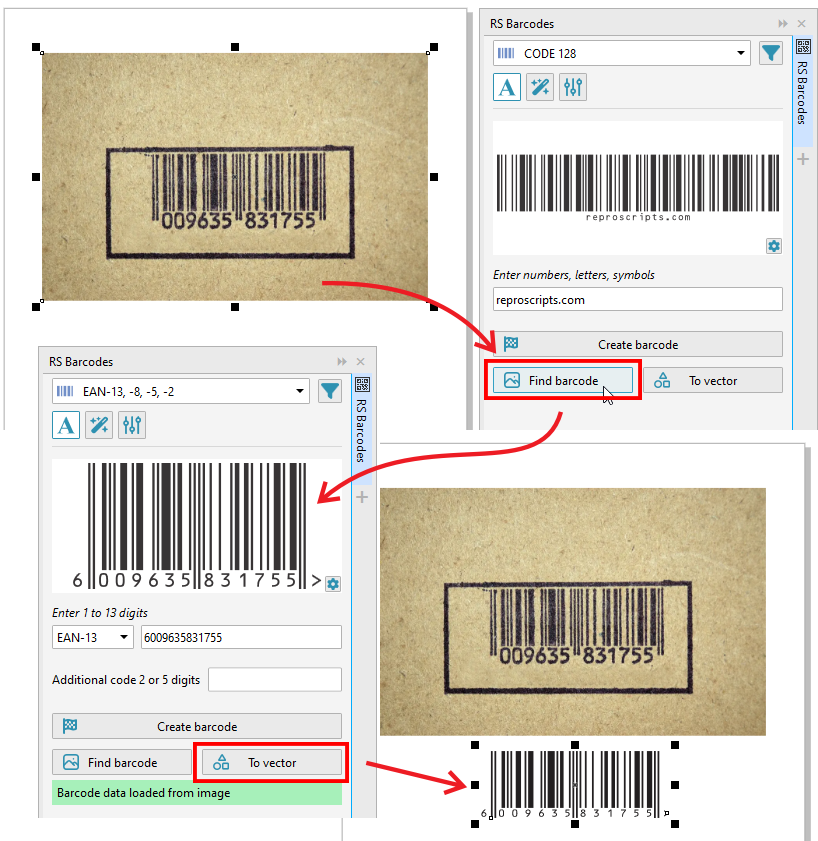
Converting a recognized barcode to vector
The command performs recognition and immediately rebuilds the detected barcode as CorelDRAW vector objects. The plugin determines the barcode type and value, locates its bounds within the selected image, and generates a new barcode fitted to that area. The resulting vector code follows the position, dimensions, and rotation of the barcode found in the image while using the current design settings from the docker. The original bitmap remains unchanged, and the newly created vector barcode is selected so that it can be moved, resized, recolored, or edited like a barcode created normally by the plugin.
List of barcodes supported by the plugin
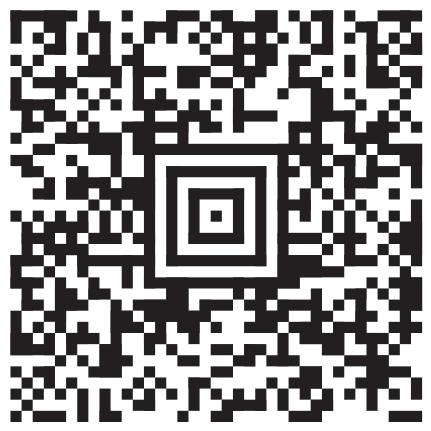
A 2D matrix code with high data capacity and error correction. Popular in mobile applications and QR-like scenarios. Supports HIBC variant. Can encode up to a maximum length of approximately 3823 numeric characters, 3067 alphabetic characters, or 1914 bytes.
Popularity: 7/10
Applications: Transportation (e-tickets, boarding passes), healthcare (patient records), and digital payments.
Supported variants:


A compact version of Aztec Code for small data (numeric only) for encoding whole integers between 0 and 255.
Popularity: 1/10
Applications: Experimental or niche applications, limited real-world use.
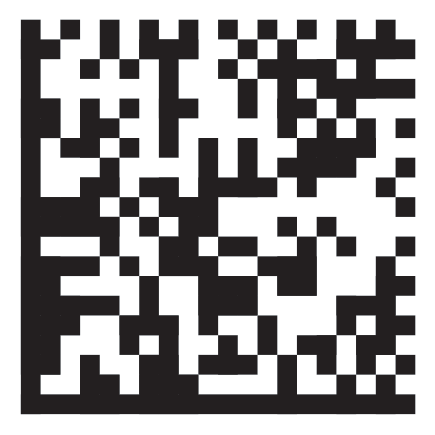
A 2D matrix code with high data density. Supports HIBC variant. The barcode can encode a large amount of data in a small area. The largest version of Data Matrix 24 (144 x 144) can encode 3116 digits, around 2335 alphanumeric characters, or 1555 bytes of data.
Popularity: 8/10
Applications: Electronics, aerospace, healthcare, and logistics.

A 2D matrix code designed for rapid scanning. Used in AIM standards for specific industries. DotCode uses a grid of dots in a rectangular formation and can encode up to approximately 1220 characters or 2940 numeric digits. It supports ECI and GS1 data.
Popularity: 4/10
Applications: Tobacco industry, high-speed printing, and logistics.

A 2D matrix code developed for Chinese markets, less common globally. Grid Matrix groups modules in a chequerboard pattern, and by default supports Hanzi, ASCII and a small number of ISO 8859-1 characters. Up to around 1529 alphanumeric characters or 2751 digits may be encoded.
Popularity: 3/10
Applications: Chinese logistics and electronics.
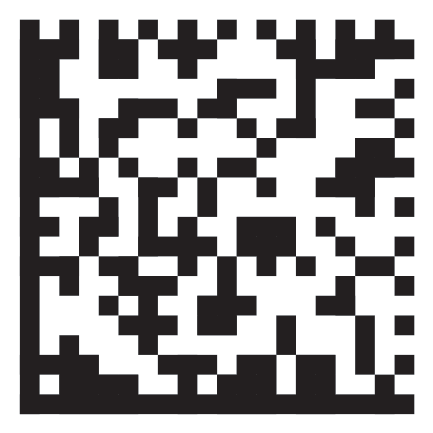
GS1 Data Matrix is a 2D barcode standard that follows GS1 specifications, encoding structured data like product IDs, serial numbers, and expiration dates for supply chain use. It includes a Function 1 (FNC1) character to indicate GS1 formatting, ensuring compatibility with GS1 standards for global trade.
Popularity: 8/10
Applications: Common for GS1 applications.
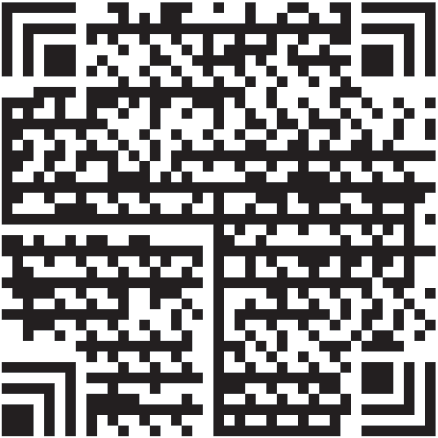
A 2D matrix code optimized for Chinese characters, limited global use. The largest version 84 (189x189) can encode 7827 digits, 4350 ASCII characters, up to 2175 Chinese characters, or 3261 bytes.
Popularity: 4/10
Applications: Chinese logistics, healthcare, and government.
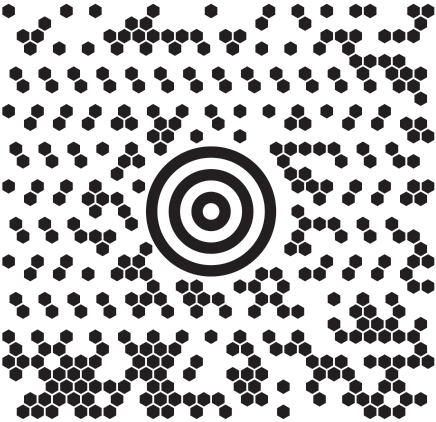
A 2D matrix code with hexagonal modules, specific to high-speed sorting. MaxiCode symbols can be encoded in one of five modes. The maximum data length depends on the selected mode and character set. Modes 2 and 3 encode up to 84 capital letters or 126 digits, mode 4 up to 93 capital letters or 138 digits, and mode 5 up to 77 capital letters or 113 digits.
Popularity: 5/10
Applications: UPS and logistics for package tracking.

PDF417 is a 2D stacked barcode that can encode large amounts of data, up to 1,850 text characters or 2,710 numeric digits. It consists of multiple rows of linear bar patterns, with a configurable number of rows (3 to 90) and columns (1 to 30). PDF417 supports adjustable error correction (9 levels, from 0 to 8) for reliable scanning, even if damaged. Compact PDF417 has the same value limits; MicroPDF417 is limited to 250 alphanumeric characters or 366 digits.
Popularity: 7/10
Applications: Driver’s licenses, logistics, and ticketing.
Supported variants:


QR Code is a 2D matrix barcode capable of encoding up to 7,089 numeric characters, 4,296 alphanumeric characters, or 2,953 bytes. It features three finder patterns and, depending on its version, additional alignment patterns for fast scanning. QR Codes support four error correction levels (L, M, Q, H), allowing data recovery even if partially damaged. Widely used for URLs, contact info, and payments, its versatility and readability make it ideal for consumer and industrial applications.
Popularity: 10/10
Applications: Marketing, payments, ticketing, and digital interfaces.

Micro QR Code is a compact 2D barcode designed for small spaces. Its largest M4 version can encode up to 35 digits, 21 alphanumeric characters, 15 bytes, or 9 Kanji characters. Symbol sizes range from 11x11 to 17x17 modules. It uses one finder pattern and supports error correction levels L, M and Q; level Q is available only for M4.
Popularity: 5/10
Applications: Electronics and small product labeling.

Rectangular Micro QR Code (rMQR) is a rectangular QR Code designed for narrow spaces. Its 32 fixed sizes range from 7x43 to 17x139 modules, with additional automatic-width modes. The largest version can encode up to 361 digits, 219 alphanumeric characters, 150 bytes, or 92 Kanji characters. rMQR supports only error correction levels M and H.
Popularity: 4/10
Applications: Narrow packaging and electronics.

Popularity: 2/10
Applications: Telecommunications equipment labeling.
Code 11 is a linear barcode symbology developed for high-density numeric data, primarily used in telecommunications. It encodes up to 140 digits and dash (-) characters. Code 11 uses a variable length format and includes one or two check digits for error detection, making it suitable for applications requiring reliable numeric encoding.

Popularity: 9/10
Applications: Shipping, logistics, retail, and inventory management.
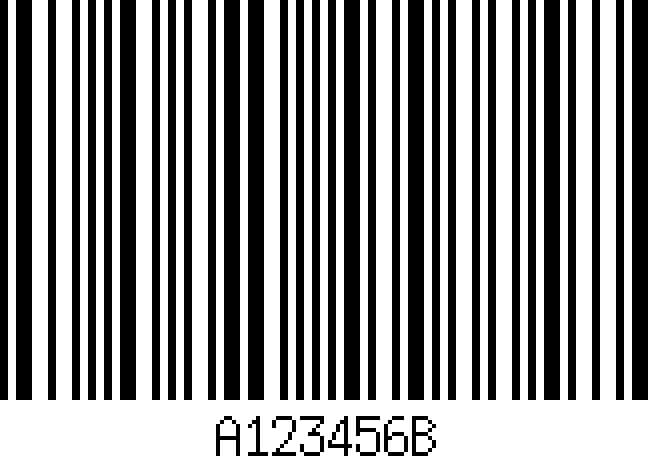
Code 128 is a high-density, linear barcode symbology that accepts the full 7-bit ASCII character set. Zint can encode at most 102 symbol characters, allowing, for example, up to 202 digits or 101 uppercase characters; values above 120 digits or 60 alphanumeric characters are not recommended. Code 128 supports three subsets (A, B, C) and includes a check digit for error detection.
Popularity: 4/10
Applications: Libraries, blood banks, airbills, and legacy inventory labels.
Codabar is a simple variable-length linear barcode used mainly in legacy systems. It encodes digits, spaces and the symbols -$:/.+ with A-D start and stop guard characters. The plugin can add the selected start and stop characters automatically and can include an optional check digit.
Popularity: 7/10
Applications: Automotive, defense, and general-purpose labeling.
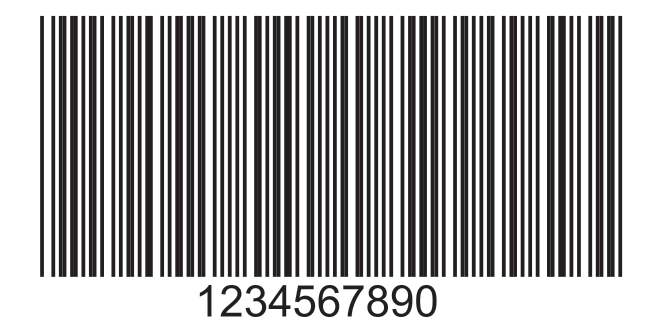
Code 39 is a linear barcode symbology that accepts up to 86 characters: digits 0-9, uppercase letters A-Z, space, and the symbols -.$/+%*. Each character is represented by a pattern of wide and narrow bars and spaces. Code 39 is variable-length and widely used in manufacturing and logistics for its simplicity and readability.

Popularity: 3/10
Applications: Canadian postal services and some logistics.
Code 93 is a compact linear barcode and an enhanced version of Code 39. Its extended encoding supports the full ASCII character set with up to 123 input characters. It offers higher density and improved reliability with two mandatory check characters.

EAN (European Article Number) barcodes are standardized systems for product identification, widely used in global retail. They encode numerical data (country code, manufacturer, product details, and check digit) in a machine-readable format, facilitating inventory tracking and sales.
Popularity: 10/10
Applications: Retail, point-of-sale, and global trade.
Supported variants:

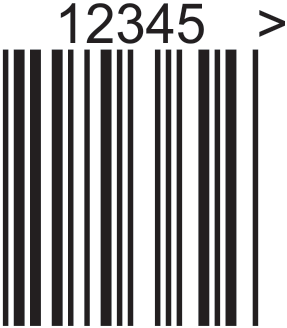

- EAN-13: Encodes a 13-digit GTIN. The plugin accepts 1 to 12 data digits and adds the check digit, or accepts all 13 digits and verifies the check digit. Shorter values are padded with leading zeroes.
- EAN-8: Encodes an 8-digit GTIN for smaller items. The plugin accepts 1 to 7 data digits and adds the check digit, or accepts all 8 digits and verifies it. Shorter values are padded with leading zeroes.
- EAN-5: 5 digits, a supplemental code for additional data (e.g., price, issue number).
- EAN-2: 2 digits, a shorter supplemental code for limited extra information (e.g., magazine issues).
Popularity: 6/10
Applications: Logistics and wholesale for carton identification.
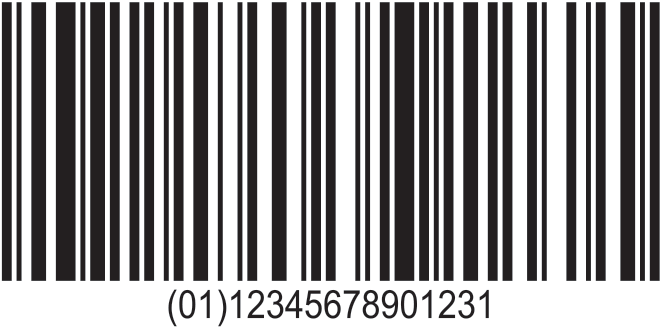
EAN-14 is a GS1-128-based symbol dedicated to GTIN-14 data. The plugin accepts up to 13 data digits, pads shorter values with leading zeroes and adds the GS1 check digit. A complete 14-digit value may also be entered, in which case its check digit is verified. The human-readable text includes Application Identifier (01).

Popularity: 8/10
Applications: Widely adopted in global supply chains due to its versatility, particularly in shipping and warehouse management.
GS1-128 is a high-density linear barcode symbology, a subset of Code 128, used globally in supply chains for encoding detailed product information like batch numbers, expiration dates, and serial shipping container codes (SSCC). It employs Application Identifiers (AIs) and a Function Code 1 (FNC1) character to define data types, ensuring interoperability and traceability in industries such as logistics, retail, and healthcare.

GS1 DataBar is a family of linear barcode symbologies designed for compact data encoding, primarily used in retail, grocery, and healthcare for small items or variable measure products. It supports GS1 Application Identifiers (AIs) to encode data like product IDs, weights, or expiration dates.
Popularity: 6/10
Applications: Moderately popular in retail and grocery for small or variable items.
Supported variants:
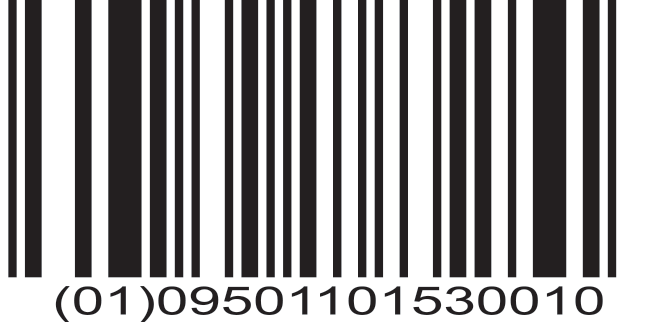
- GS1 DataBar Truncated: A reduced-height version of GS1 DataBar Omnidirectional. It accepts up to 13 item-code digits and adds the check digit, or accepts and verifies a complete 14-digit value. Shorter values are padded with leading zeroes.
- GS1 DataBar Limited: A compact variant with the same 13-data-digit or 14-digit checked input, restricted to values beginning with 0 or 1. Shorter values are padded with leading zeroes.
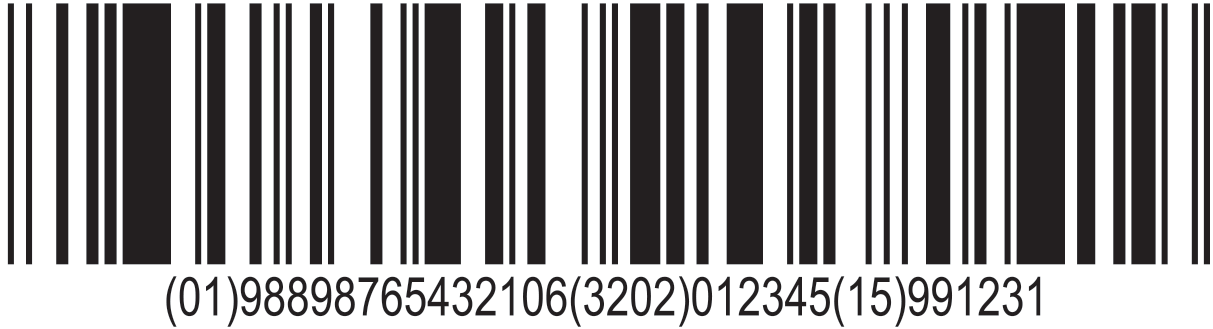
- GS1 DataBar Expanded: A more versatile version that can encode up to 74 numeric or 41 alphanumeric characters, including additional data like lot numbers or dates, suitable for complex retail or healthcare applications.
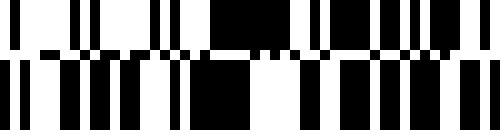
- GS1 DataBar Stacked: A stacked form for narrow labels. It carries the same GTIN-style data as GS1 DataBar Truncated while using two rows to reduce symbol width.
- GS1 DataBar Stacked Omnidirectional: A taller stacked form designed for omnidirectional point-of-sale scanning when package width is limited.
- GS1 DataBar Expanded Stacked: A multi-row version of GS1 DataBar Expanded for GS1 Application Identifier data when the available print area is too narrow for the single-row Expanded symbol.
Popularity: 5/10
Applications: Used in specific applications like logistics and film processing.
Interleaved 2 of 5 (ITF) is a continuous, two-width barcode symbology that encodes digits in pairs, using five bars for the first digit and five spaces for the second. It is compact, accepts up to 124 digits, and is used in logistics, retail (for example ITF-14 cartons), and 135 film canisters.
Popularity: 9/10
Applications: Extremely popular and universally adopted in the global publishing and bookselling industries.
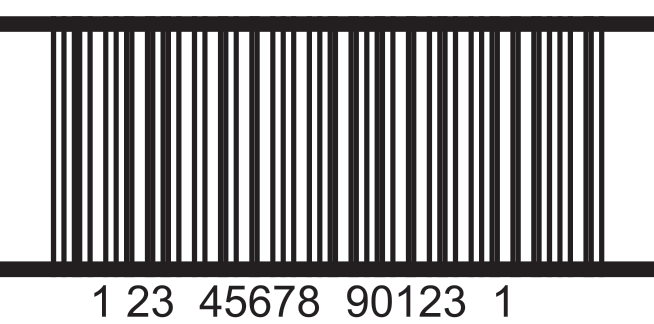
The International Standard Book Number (ISBN) identifies books and is rendered as a Bookland EAN-13 symbol. The plugin accepts a 9-digit SBN, a 10-character ISBN (whose check character may be X), or a 13-digit ISBN-13. The supplied check character is verified before the barcode is generated.
Popularity: 7/10
Applications: Widely used in retail and logistics for outer packaging.
ITF-14 is based on Interleaved 2 of 5 and encodes a 14-digit GTIN for shipping cartons and pallets. The plugin accepts 1 to 13 data digits, pads shorter values with leading zeroes and adds the GS1 check digit. A complete 14-digit value may also be entered, in which case its check digit is verified.
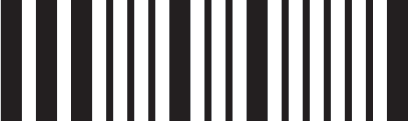
Pharmacode, also known as Pharmaceutical Binary Code, is a 1D barcode standard used in the pharmaceutical industry for packaging control. Developed by Laetus, it encodes numeric data in binary format using bars of varying widths, designed to be readable despite printing errors. It is not used for point-of-sale but for in-house inventory and security verification.
Popularity: 4/10
Applications: Primarily used in pharmaceutical packaging for internal control, with limited adoption outside this sector.
Supported variants:

- Pharmacode One-Track: The standard Pharmacode, it uses a single row of bars (thick and thin) to encode integers from 3 to 131070, read typically from right to left. It supports color bars for print verification and has a miniature version for limited space. It is used for matching packaging materials and contents.
- Pharmacode Two-Track: A variant that uses two rows of bars, combining full and half-height bars vertically to encode integers from 4 to 64570080. It also reads right to left and is designed for enhanced data capacity in pharmaceutical packaging control.

The plugin supports MSI Plessey and UK Plessey. MSI Plessey is numeric-only and accepts up to 92 digits with configurable check-digit algorithms. UK Plessey accepts up to 67 hexadecimal characters (0-9 and A-F) and includes CRC error detection.
Popularity: 3/10
Applications: Retains moderate use in inventory systems.
Supported variants:
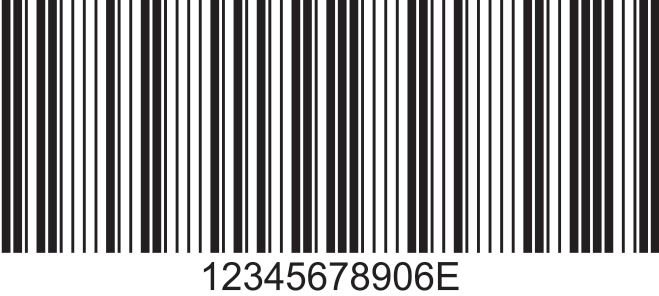
- MSI Plessey (Modified Plessey): Developed by MSI Data Corporation. It is a numeric-only, variable-length barcode with several selectable check-digit schemes, commonly Mod-10, and is used for inventory tracking in warehouses and retail.
- UK Plessey: The original hexadecimal Plessey symbology, using pulse-width modulation and an 8-bit CRC. It was historically used for retail restocking and library systems in the UK.

UPC-A encodes a 12-digit GTIN used primarily in North American retail. The plugin accepts 1 to 11 data digits, pads shorter values with leading zeroes and adds the check digit. A complete 12-digit value may also be entered, in which case its check digit is verified.
Popularity: 9/10
Applications: Ubiquitous in global retail, especially in North America, due to its standardization and compatibility.
Supported variants:

- UPC-E: A zero-compressed version of UPC-A for smaller packages. The plugin accepts up to 7 data digits, pads shorter values with leading zeroes and adds the check digit. If all 7 data digits are supplied, the first must be 0 or 1. An 8-digit value with its check digit may also be supplied and verified.

Popularity: 8/10
Applications: Widely used in the automotive industry globally for vehicle tracking and documentation, but limited to this sector.
The VIN (Vehicle Identification Number) barcode uses Code 39 to encode exactly 17 digits or uppercase Latin letters. The letters I, O and Q are excluded to avoid confusion with numerals. A VIN uniquely identifies a vehicle according to ISO 3779.




The Australia Post 4-State barcode is used for automated mail sorting and includes Reed-Solomon error correction. Customer Barcode accepts 8, 13, 16, 18 or 23 input characters. The first 8 characters are a numeric Delivery Point ID; 13- and 18-character inputs may use 0-9, A-Z, a-z, space and # for customer data, while 16- and 23-character inputs must be numeric. Reply Paid, Routing and Redirect variants each require an 8-digit Delivery Point ID.


The Deutsche Post barcode is used for mail and parcel tracking in Germany, primarily through two formats: Leitcode and Identcode. Both are based on Interleaved 2 of 5 and have their check digit added by the generator.
- Leitcode: Requires 13 input digits used for routing; the generator appends the check digit to produce the 14-digit symbol.
- Identcode: Requires 11 input digits used for item identification; the generator appends the check digit to produce the 12-digit symbol.

The Dutch Post KIX Code (Klantenindex) is a four-state barcode used for automated mail sorting in the Netherlands. It requires exactly 11 uppercase alphanumeric characters (0-9 and A-Z) and does not include a check digit. KIX is based on the Royal Mail 4-State Customer Code but omits its start and stop bars.

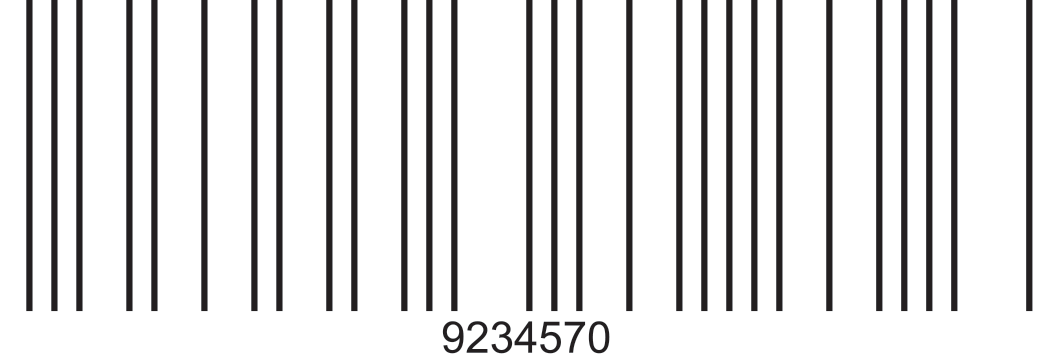
The Korea Post Barcode is a numeric linear barcode used for automated mail sorting. It requires a 6-digit input and includes one generated check digit.



The Royal Mail Barcode is used by the UK’s Royal Mail for automated mail sorting and tracking, primarily based on the Royal Mail 4-State Customer Code (RM4SCC). It encodes alphanumeric data (0-9, A-Z) using four bar types (ascender, descender, tracker, full) to represent postal codes and delivery details. All variants are machine-readable, designed for high-speed sorting, and include error-checking mechanisms. They require a quiet zone around the barcode and specific placement on mail items.
- Customer Code (RM4SCC): Accepts up to 50 uppercase alphanumeric characters (0-9 and A-Z); the check digit is generated automatically.
- Mailmark: Accepts pre-formatted Barcode C or Barcode L data, normalized to 22 or 26 characters respectively. The value contains format/version, class, supply-chain ID, item ID and a 9-character Destination+DPS field; permitted trailing spaces may be omitted and are appended by Zint.
- 2D Mailmark: Uses a pre-formatted 45-character core followed by customer data. Supported symbol types allow up to 6, 29 or 45 customer-data characters; Zint can add the leading
JGBcountry identifier and required padding.
